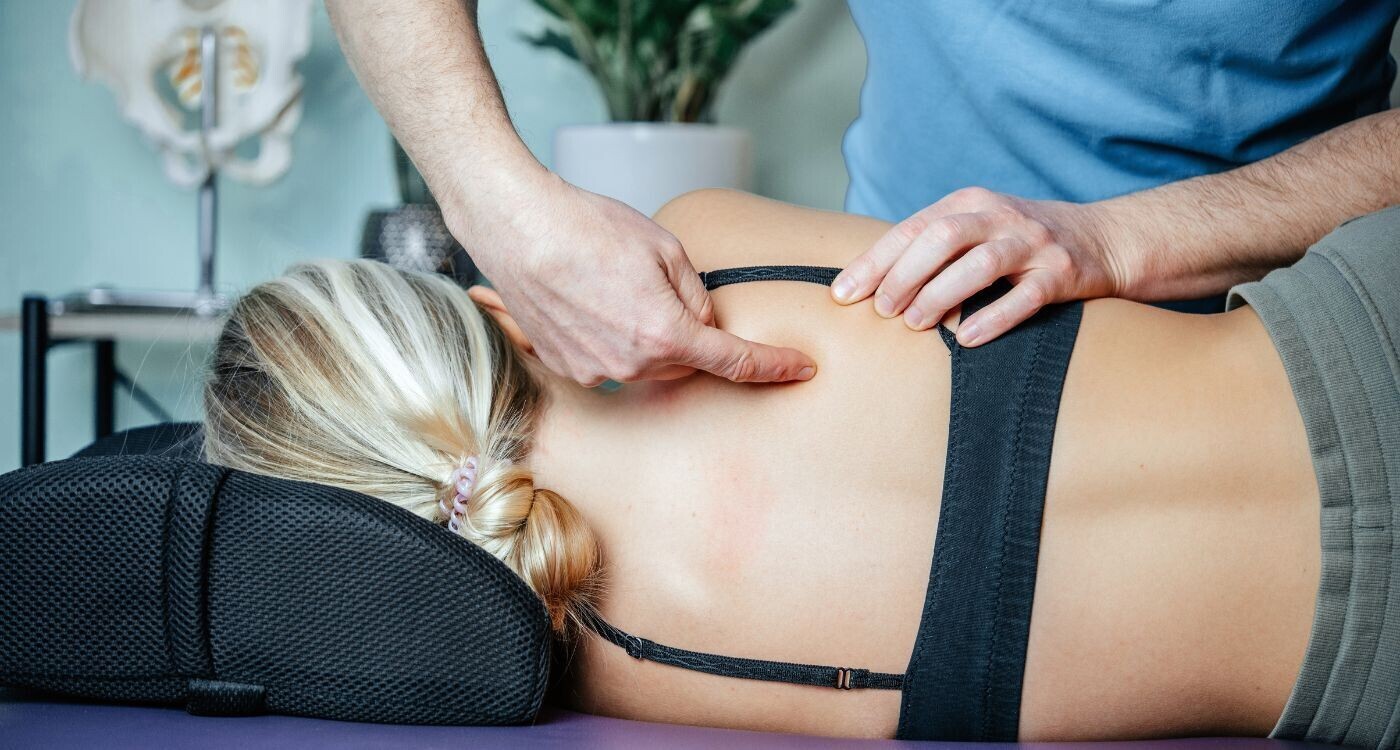
If a muscle has felt tight for months, or a joint hasn't moved the same since an old injury, you may have come across the term adhesion release therapy. It refers to hands-on treatment for muscle adhesions: spots where layers of muscle, tendon, fascia or nerve have started to stick together instead of gliding past each other.
At Keystone Spine and Sport in King of Prussia, adhesion release sits at the center of how Dr. Tim Legath, D.C., treats patients. Tim is a full-body certified Active Release Technique (ART) provider, and most of the people he sees are athletes and active adults who want to know what is going on in the tissue and what can be done about it. Below, we cover what adhesions are, how manual adhesion release works, and what to expect from a session.
What Are Muscle Adhesions?
Healthy soft tissue slides. When you reach overhead, the muscles of your shoulder, the tendons that anchor them and the fascia that wraps them all move against each other with very little friction.
Injury and overuse change that. When tissue is strained, torn or loaded over and over without enough recovery, the body lays down new collagen to repair it. Research on skeletal muscle injury shows this repair often produces fibrous scar tissue rather than a perfect copy of the original muscle (PMC, Fibrosis Following Acute Skeletal Muscle Injury). That denser tissue can bind neighbouring layers together. Those binding points are what clinicians call adhesions.
Common sources include:
- A past strain or sprain that healed but never felt quite right
- Repetitive motion, like running, throwing, skating or swinging a club
- Long hours at a desk or holding one posture
- Reduced blood flow to a tissue after an injury
What Do Muscle Adhesions Feel Like?
Most people describe a spot that stays tight no matter how much they stretch, a band or knot under the skin, or a movement that catches at the same point every time. Some notice weakness or a dull ache that builds with activity. When an adhesion involves a nerve, it can cause tingling or numbness along that nerve's path.
Those symptoms overlap with other problems, so a proper assessment should come first.
What Is Adhesion Release Therapy?
Adhesion release therapy is a broad term for manual techniques that aim to break up or remodel adhesions so tissue can glide normally again. You'll also see it called manual adhesion release or soft tissue release. Approaches range from massage and myofascial release to instrument-based work.
Active Release Technique is one of the most structured forms. ART providers train to find and treat specific muscles, tendons, ligaments, fascia and nerves by feel (Active Release Techniques). Full-body certification covers every region of the body, not one area, and it is the credential Tim holds.
How Active Release Technique Works on Adhesions
An ART treatment pairs pressure with movement. Tim locates the restricted tissue with his hands and holds tension on it. He then guides you through a specific motion that lengthens that tissue under his contact. The goal is to free the stuck layers and get them sliding again.
Patients who expect a "rack and crack" visit are often surprised. Tim's focus is the soft tissue that controls how a joint moves. His view is that movement is the best medicine, and that restoring motion and blood flow to an injured structure gives it a better environment to heal.
A visit at Keystone Spine and Sport usually includes:
- An assessment of how you move and where that movement breaks down, drawing on Tim's McKenzie Method (Parts A & B) training for back and neck complaints
- Hands-on ART to the tissues involved
- Supporting tools where they fit, such as instrument assisted soft tissue mobilization (IASTM), Kinesio taping or FAKTR, a rehab approach that treats tissue while you move
- Exercises to keep the tissue moving between visits
Does Adhesion Release Hurt?
It can be uncomfortable. ART uses firm pressure on tissue that is already irritated, so most people feel something between a deep stretch and a pressure point. Tim adjusts the pressure based on your feedback throughout. Some soreness for a day or two afterward is common, similar to the day after a hard workout.
Who Is Adhesion Release Therapy For?
Adhesion release tends to suit problems that are mechanical and rooted in soft tissue. In Tim's practice, that often means:
- Athletes with recurring strains, tendon irritation or tightness that limits performance
- Weekend warriors who picked up an injury and never got their full range back
- Desk workers with neck, shoulder or low back tightness from long hours in one position
- People with shoulder problems such as rotator cuff tendinitis
Tim has worked with high school, NCAA, professional and Olympic athletes, along with plenty of patients whose main goal is to run, lift or keep up with their kids. A lifelong hockey player, he first came to soft tissue care through his own injuries on the ice.
Adhesion release isn't the answer for everything. Suspected fractures, severe or unexplained pain, fever, or changes in bladder or bowel control need medical evaluation first. If your assessment points in that direction, Tim will refer you.
What the Research Says
Manual soft tissue therapy is widely used in sports and rehab settings, but research on any single technique is still developing. Cleveland Clinic notes, for example, that myofascial release may help reduce pain, although studies haven't shown that it works for everyone (Cleveland Clinic).
Results vary from person to person. Hands-on treatment tends to work best when it follows an accurate assessment and is paired with active movement, which is why Tim combines ART with assessment and exercise instead of relying on one tool.
How Many Sessions Will You Need?
That depends on how long the problem has been there, how much tissue is involved and how your body responds. A recent strain may settle in a handful of visits. A problem you've been working around for years usually takes longer. After your first assessment, Tim will tell you what he expects and will check your progress at each visit so you aren't left guessing.
Adhesion Release Therapy in King of Prussia
If you have a spot that won't let go, or a movement that hasn't felt right since an old injury, adhesion release therapy may be worth exploring. Dr. Tim Legath treats patients at Keystone Spine and Sport, 170 N. Henderson Rd., Suite 310 (inside MedcoShare), in King of Prussia.
Learn more about Active Release Technique in King of Prussia, read about Tim's sports chiropractic care and soft tissue therapy, or book an appointment online.
Frequently Asked Questions
Can Muscle Adhesions Go Away on Their Own?
Mild tightness often eases with movement, stretching and time. Adhesions linked to an old injury or years of repetitive load tend to hang around, because the tissue has already healed in a restricted position. That is where targeted manual work like ART can help.
Are Muscle Adhesions Real?
"Adhesion" is a clinical shorthand, and researchers still debate exactly what happens in the tissue. What isn't in doubt is that scar tissue forms after injury and that restricted, painful movement is real. Tim's assessment focuses on how your tissue moves and where it is limited, so treatment is based on what he finds, not on a label.
How Is ART Different From Massage?
Massage usually covers broad areas to relax muscle and ease tension. ART is more specific: the provider finds the exact structure that is restricted and treats it while you move it through a set motion.

